October 1, 2020
Meet the artists making comics in Seattle’s historic drawbridges
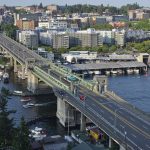
Seattle is home to more than a hundred bridges, four of which are historic bascule bridges spanning the Lake Washington Ship Canal — the massive earthmoving project that took from 1911 to 1917. Also known as drawbridges, the Montlake, University, Fremont and Ballard crossings are operated by bridgetenders who work in the towers and lift the double leaves…
Arts & Culture | Infrastructure & Transportation | Water
September 29, 2020
Applied Research Fellows develop tool to explore population changes in King County
The 2020 Population Health Applied Research Fellows concluded their 10-week program to produce small area population forecasts at the Census tract and Health Reporting Area levels by sex, race, ethnicity and five-year age groups for King County from 2020 to 2045. Their findings, which were presented to staff from a variety of King County departments,…
Advocacy & Civic Engagement | Data Science & Spatial Analysis | Diversity, Equity & Justice | Innovation & Technology | Policy & Law
September 28, 2020
As wildfire smoke clears, King County’s airport communities continue fight for clean air

As massive clouds of smoke from wildfires throughout the region obscured the sky last week, SeaTac Deputy Mayor Peter Kwon filtered the air in his own home by attaching a furnace filter to a box fan and then duct-taping a triangular piece of cardboard over the gaps. When the air quality index (AQI) rose to…
Data Science & Spatial Analysis | Health & Well Being | Natural Hazards | Natural Resources & Environment
September 24, 2020
COVID-19 testing in King County homeless shelters shows need to create safer conditions in crowded settings
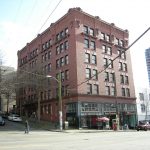
Border detention facilities, prisons and refugee camps have something in common with communal homeless shelters, University of Washington School of Medicine researchers say. They’re home to “closed, crowded conditions where people have to live in small spaces and share a lot of common facilities,” said Dr. Helen Y. Chu, associate professor at the UW School…
Advocacy & Civic Engagement | Diversity, Equity & Justice | Health & Well Being | Housing & Homelessness
September 23, 2020
Seattle-area families of color are talking about improving remote education. Here are some of their ideas.
Regina Elmi is the executive director of the Somali Parent Education Board. Ann Ishimaru is associate professor of education at the University of Washington. The authors wrote this piece along with 10 other African American, Somali, Latina and Vietnamese parent leaders from the Renton, Federal Way, Kent, Highline and Seattle school districts. Thousands of families…
Advocacy & Civic Engagement | Diversity, Equity & Justice | Education | Health & Well Being
September 22, 2020
Wildfire smoke disproportionally harms poorer communities, remedies necessary to address health inequity
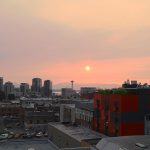
With most of the Northwest blanketed by wildfire smoke, public officials and health experts suggest staying inside as much as possible to reduce exposure to the significant health risks of wildfire smoke. However, inequity in our communities means not every home provides great protection and many workers in disadvantaged populations can’t afford to stay home, says Anjum Hajat,…
Diversity, Equity & Justice | Health & Well Being | Housing & Homelessness | Natural Hazards
September 18, 2020
Food insecurity rates have more than doubled since start of COVID-19 pandemic
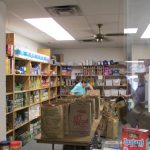
Since the onset of the pandemic, food insecurity rates have more than doubled in our state. That’s according to researchers at the University of Washington who have just compiled the results from their first round of a statewide survey. It was done this summer in cooperation with Washington State University and Tacoma Community College, as well…
Diversity, Equity & Justice | Food | Health & Well Being
September 17, 2020
Project Highlight: Seattle Street Sink
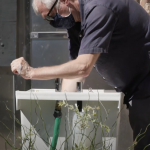
For many living unsheltered, access to a place to wash up is hard to come by. During the pandemic, it is more important than ever to have accessible hygiene stations. The Real Change Advocacy Department partnered with University of Washington College of Built Environments faculty to design and install environmentally friendly “street sinks”. On May…
Advocacy & Civic Engagement | Design & Building | Diversity, Equity & Justice | Health & Well Being | Housing & Homelessness | Innovation & Technology
September 15, 2020
The pandemic is transforming how Americans use public libraries, parks, and streets — and it’s depriving vulnerable people of space when they need it most
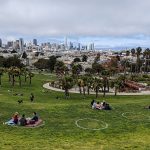
On a Friday in early March, Jennifer Pearson looked around her library in Lewisburg, Tennessee. “The library was full of older people,” Pearson, the library’s director, said. “I thought, if I don’t close this space, they will never stop coming to it, so I have to close it, for their good and for my staff.”…
Advocacy & Civic Engagement | Design & Building | Diversity, Equity & Justice | Health & Well Being | Land Use & Planning
September 14, 2020
At center of police defunding debate, King County Equity Now and Decriminalize Seattle reimagine public safety
Thousands of activists and community leaders gathered June 5 in front of the decommissioned Fire Station 6 to discuss the future of Seattle. The 1930s building represented a juncture in the Central District’s past and present: Its art deco façade stood at the corner of a once-thriving Black neighborhood dating back to the 1800s that, largely due…
Advocacy & Civic Engagement | Diversity, Equity & Justice | Health & Well Being | History & Preservation | Policy & Law