November 20, 2020
New report by UDP PhD Candidate Katie Idziorek: Toward Universal Access

Urban Design & Planning PhD candidate Katie Idziorek is a co-author on a significant new report published this month: Toward Universal Access: A Case Study in the Los Angeles and Puget Sound Regions. Read an excerpt below: Approximately 61 million U.S. adults—one quarter of the adult population—live with some form of disability. The Americans with Disabilities…
Advocacy & Civic Engagement | Diversity, Equity & Justice | Infrastructure & Transportation
November 19, 2020
Seattle could become the next 15-minute city

A growing number of politicians, urban planners and climate experts believes that 15 minutes is roughly the maximum amount of time city dwellers should spend getting to basic needs — without having to resort to a car. In the so-called “15-minute city,” nutritious food, libraries, health care, parks, cafés and other amenities should be within a short walk, bike ride or roll…
Climate & Energy | Economy & Development | Health & Well Being | Infrastructure & Transportation | Land Use & Planning | Natural Resources & Environment
November 18, 2020
Accessible pedestrian routing tools expand to three Washington cities
Whether navigating urban spaces with different abilities, or simply seeking a walking or biking path that prioritizes specifications other than the quickest route and shortest distance, having access to standardized, comprehensive data about pedestrian pathways offers wide-ranging benefits. However, this information is often difficult to find due to local variations in data collection, inconsistencies and…
Data Science & Spatial Analysis | Diversity, Equity & Justice | Infrastructure & Transportation | Innovation & Technology
The pandemic changed our daily routines. Here’s how that’s impacting mental health, productivity and the environment
Few people think about the impact their daily routine has on themselves, or even the planet. But the small actions — from what you eat for breakfast to how you commute to work — are having an effect. Urban Design and Planning doctoral student Xiao Shi has long been interested in the small and large impacts of people’s…
Health & Well Being | Infrastructure & Transportation | Natural Resources & Environment | Policy & Law
November 12, 2020
City launches real estate company to save and create Seattle art spaces
Even before COVID-19 took a sledgehammer to Seattle’s arts and entertainment sector, things were rough for cultural organizations trying to hold on to venues in the city’s booming real estate market. Every panel conversation about galleries, nearly any article about the closure of yet another music venue came back to the same core issue: There’s…
Arts & Culture | Economy & Development | Land Use & Planning
November 10, 2020
In King County, pollution makes ZIP codes predictors of your health
In Seattle, a ZIP code can predict everything from income to social class to life expectancy. White, wealthy residents of northern neighborhoods such as Laurelhurst live 13 years longer than their poorer neighbors of color in the southern neighborhoods of South Park and Georgetown. Air and soil pollution has disproportionately affected Seattle’s communities of color for…
Advocacy & Civic Engagement | Diversity, Equity & Justice | Health & Well Being
November 9, 2020
A UW student’s 3D video game depicts life during COVID-19 pandemic for people of color
During the pandemic, many people have leaned into art and hobbies to ease the stress of everyday life. For Chanhee Choi, a multidisciplinary interactive artist and Ph.D. candidate in the University of Washington Digital Arts and Experimental Media department, art became a way to reflect on her experience with discrimination and racism as a Korean in America during the…
Arts & Culture | Diversity, Equity & Justice | Health & Well Being | Innovation & Technology
November 6, 2020
The Digital Divide: Gender and technology in an unequal world
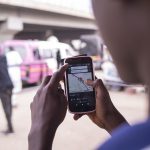
All over the world, digital literacy and access to technology are commonly divided along gender and racial lines. During a global pandemic that has forced an even stronger reliance on technology than before, the disproportionate and inadequate access that lower-income women of color face is clear, both around the United States and in the Global…
Diversity, Equity & Justice | Economy & Development | Infrastructure & Transportation | Innovation & Technology
November 5, 2020
New UW study shows COVID-19 doesn’t spread evenly through Seattle neighborhoods
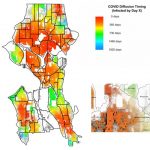
A new study published by researchers from the University of Washington and UC Irvine examines how COVID-19 spreads in different neighborhoods and it found the virus doesn’t spread evenly through a community. The study, published in September in the Proceedings of the National Academy of Sciences, factors in network exposure and demographics to simulate where and how quickly…
Data Science & Spatial Analysis | Health & Well Being
November 4, 2020
Seattle Growth Podcast 7.1: the pandemic’s effect on real estate and restaurants

Jeff Shulman created the Seattle Growth Podcast in 2016, a time when Seattle was in a state of profound transition while experiencing unprecedented economic and population growth. Shulman, the Marion B. Ingersoll Professor of Marketing at the University of Washington Foster School of Business, wanted to bring diverse voices together for a constructive dialogue about where Seattle has…
Arts & Culture | Economy & Development | Health & Well Being