November 9, 2021
WA’s frontline communities face the brunt of climate change
Urban@UW colleague Rubén Casas shares his perspective on challenges and opportunities for mobilizing vulnerable communities in the face of climate change in this op-ed written for Crosscut. — In my last column, I called for a centralized, coordinated solutions center to help us meet the challenges of climate change — a kind of “help desk” for…
Advocacy & Civic Engagement | Climate & Energy | Diversity, Equity & Justice
November 2, 2021
UW receives $2M from National Science Foundation to design an ‘adaptable society’
A team led by the University of Washington has received a nearly $2 million grant from the National Science Foundation to further research into how urban societal systems can be organized to be both efficient and resilient. The Leading Engineering for America’s Prosperity, Health and Infrastructure (LEAP-HI) project, based in the UW College of Engineering, supports fundamental research to…
Diversity, Equity & Justice | Food | Infrastructure & Transportation | Land Use & Planning
October 29, 2021
A new tool suggests we’re underestimating the environmental cost of new roads
The infrastructure bill being hammered out in D.C. will fund a lot of road projects, including some in Washington State. But it’s difficult to reduce our carbon emissions when we keep building more highways. That’s what inspired a network of environmental groups to build a calculator that shows how much air pollution is caused by…
Data Science & Spatial Analysis | Infrastructure & Transportation
October 28, 2021
Urban@UW: The Next Phase
In cities across the Pacific Northwest and around the globe, the COVID-19 pandemic has shed new, harsh light on the preexisting societal conditions. Persistent problems such as systemic racism, homelessness, and extreme weather events driven by climate change have intersected with the pandemic in our urban spaces, resulting in deeply unequal impacts for underinvested communities…
October 26, 2021
UW students designed a rover to inspect culvert conditions to help fish
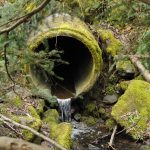
Now that the rainy season is here, culverts across the city are giving stormwater and streams a clear path away from streets and roads. Before the rains come, the Washington Department of Transportation inspects these concrete or metal tunnels for any damage that could prevent fish from using them during migration. But there are a lot…
Innovation & Technology
October 22, 2021
New dean, new perspectives
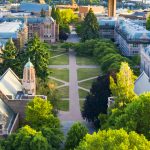
“I’m an optimist, but also a realist,” says Dianne Harris, who joined the UW College of Arts & Sciences as dean on September 1. Those qualities — and Harris’s dedication to cross-disciplinary work throughout her career — will serve her well as she leads the University’s largest and most academically diverse college. Harris began her…
October 19, 2021
Home after fire: A new housing model aims to give kids stability
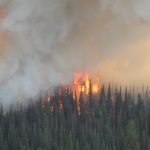
When the Almeda Fire hit southern Oregon on Labor Day weekend just over a year ago, Christy Brooks was on her way home from her daughters’ school after picking up books and a computer in preparation for the coming year. The air was smoky and smelled burnt, but Brooks doesn’t remember feeling overly concerned. She…
Diversity, Equity & Justice | Housing & Homelessness | Natural Hazards
October 13, 2021
UW study provides rare window into work life of app-based drivers during pandemic

When you get into the car of the app-based driver you just tapped up on your phone, you expect and hope the driver and the car are safe and capable of getting you where you need to go. Apps rate drivers, which you can see. But what if the driver is sick? What if the…
Diversity, Equity & Justice | Health & Well Being | Infrastructure & Transportation
October 12, 2021
Lynden has spent more than a year testing poop for COVID-19. Was it a good investment?
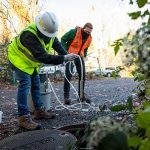
The poop doesn’t lie — at least in Lynden, where it has helped guide the city’s pandemic response for over a year. The Whatcom city has become home to one of the most thorough COVID-19 wastewater testing programs in the U.S., said Kent Oostra, owner of Ferndale-based Exact Scientific Services. His lab has tested Lynden’s…
Data Science & Spatial Analysis | Health & Well Being | Innovation & Technology | Water
October 7, 2021
Bigleaf maple decline tied to hotter, drier summers in Washington
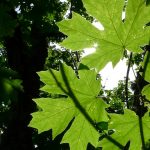
As its name suggests, the bigleaf maple tree’s massive leaves are perhaps its most distinctive quality. A native to the Pacific Northwest’s wet westside forests, these towering trees can grow leaves up to 1.5 feet across — the largest of any maple. But since 2011, scientists, concerned hikers and residents have observed more stressed and…
Climate & Energy | Natural Resources & Environment