February 19, 2016
Reading List for Dr. Mario Small’s Visit 2/25

In anticipation of next week’s lecture with Harvard’s Dr. Mario Luis Small we thought you might enjoy a few readings to get a feel for what exactly he is all about. No Two Ghettos Are Alike – This short piece by Dr. Small shares it’s name with Thursday’s lecture, and explores some of the complex…
Diversity, Equity & Justice | Economy & Development | Education | Land Use & Planning
February 12, 2016
Heterogeneity and American Ghettos with Dr. Mario Luis Small – 2/25
February 25th / 6:00-7:30pm / CMU 120 Dr. Mario Luis Small Grafstein Family Professor, Harvard University By the end of the 20th century, the dominant theories of urban poverty argued that U.S. ghettos had become isolated areas devoid of everyday institutions and disconnected from mainstream society. Dr. Small examines whether the conventional models have underestimated…
Advocacy & Civic Engagement | Design & Building | Diversity, Equity & Justice | Economy & Development | History & Preservation | Housing & Homelessness
New! Urban Map Gallery
We’ve created a new urban map gallery to explore how other people and organizations are studying and visualizing data. The gallery features seven cities facing different social, economic, and geographic issues. This curation is not meant to be an exhaustive list, but rather provide insight and inspiration. Maps included track everything from sound to subway…
Advocacy & Civic Engagement | Arts & Culture | Climate & Energy | Data Science & Spatial Analysis | Design & Building | Diversity, Equity & Justice | Economy & Development | Education | Food | Health & Well Being | History & Preservation | Housing & Homelessness | Infrastructure & Transportation | Innovation & Technology | Land Use & Planning | Natural Hazards | Natural Resources & Environment | Policy & Law | Security & Privacy | Water
February 5, 2016
Metrolab Project Library
MetroLab Network is now featuring several members’ projects online. Visit their site to explore the research, development & deployment projects being undertaken by some of our city-university members (Seattle & UW included). Check out projects that address transportation, energy, and climate issues. And stay tuned, they will be adding many more projects from their other…
Data Science & Spatial Analysis | Innovation & Technology
February 3, 2016
Risk of lead poisoning from urban gardening is low, new study finds

Using compost is the single best thing you can do to protect your family from any danger associated with lead in urban soils. Good compost will also guarantee that you will have plenty of vegetables to harvest. That’s the main finding of a paper appearing this month in the Journal of Environmental Quality. The University…
Design & Building | Land Use & Planning | Natural Hazards | Natural Resources & Environment
January 31, 2016
Monthly Wrap up January 2016
It’s been a great start to 2016. UW Alumni association and History Department put together a woderful history lecture series: Excavating Seattle’s histories: Peoples, politics, and place check out details and videos here> The CBE also hosted a number of great speakers and events including SUSTAINING JAPAN: 3.11 FIVE YEARS ON lecture and panel discussion…
Climate & Energy | Data Science & Spatial Analysis | Design & Building | Economy & Development | Education | History & Preservation | Infrastructure & Transportation | Natural Hazards | Natural Resources & Environment
January 8, 2016
Research Spotlight: An Octopus’ Garden in the Urban Underwater Environment
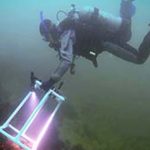
Eliza is a Ph.D. candidate in the UW Department of Biology and a graduate fellow in the IGERT Program on Ocean Change. She studies urban marine ecosystems under the guidance of Dr. Ken Sebens. If you like what you read below, check out her blog at www.urbanmarineecology.org. In 1955, Columbia Pictures released the thriller It…
Natural Resources & Environment | Water
January 6, 2016
What motivates people to walk and bike? It varies by income
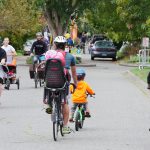
Lower- and middle-income King County residents who live in denser neighborhoods — with stores, libraries and other destinations within easy reach — are more likely to walk or bike, according to new University of Washington research. But neighborhood density didn’t motivate higher-income residents to leave their cars at home, the transportation engineers found. Of the…
Design & Building | Diversity, Equity & Justice | Economy & Development | Health & Well Being | Infrastructure & Transportation
January 5, 2016
Re-Imaging Urban Scholarship: Differencing the Data
Winter Quarter 2016 | HUM 597E | 1 credit, C/NC Instructor:Thaisa Way (Landscape Architecture) Meeting Dates: Friday, January 15, 12-1:20 pm (Startup Hall) Friday, January 29, 12-1:20 pm (Henry Art Gallery) Tuesday, February 2, and Wednesday, February 3 (Participation encouraged as feasible, Center for Urban Horticulture) Thursday, February 4, 9-10:20 am (eScience Institute, Physics/Astronomy Tower)…
Arts & Culture | Data Science & Spatial Analysis | Design & Building | Diversity, Equity & Justice
December 18, 2015
UW/Seattle MetroLab Partnership
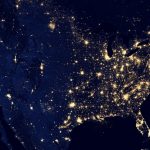
Have you been wondering what exactly is going to happen with the Seattle / UW partnership under the MetroLab initiative? The three “named” projects from Seattle will be the Array of Things partnership with Chicago, Private data sharing with the Tech Policy Lab, and a smart grid study of the relationship between temperature and power…
Climate & Energy | Data Science & Spatial Analysis | Economy & Development | Innovation & Technology | Policy & Law | Security & Privacy