November 29, 2018
UW’s Marina Alberti to lead new NSF-funded research network to study impact of cities on Earth’s evolutionary dynamics
Here in what is called the Anthropocene era, humans and our urban environments appear to be driving accelerated evolutionary change in plants, animals, fungi, viruses and more — changes that could affect key ecosystem functions and thus human well-being. These interactions between evolution and ecology are called “eco-evolutionary feedback.” The National Science Foundation has awarded a five-year,…
Climate & Energy | Natural Resources & Environment
November 27, 2018
Parks help cities – but only if people use them
Written by Thaisa Way, faculty director of Urban@UW and Professor in the Department of Landscape Architecture in the College of Built Environments. In cities, access to parks is strongly linked with better health for both people and neighborhoods. Children suffer higher rates of obesity when they grow up in urban areas without a park in easy reach. Because low-income neighborhoods have fewer green spaces, poorer…
Advocacy & Civic Engagement | Design & Building | Diversity, Equity & Justice | Health & Well Being | History & Preservation | Infrastructure & Transportation | Innovation & Technology | Land Use & Planning
November 21, 2018
Urban Freight Lab will help UPS evaluate its new e-bike delivery service in Seattle
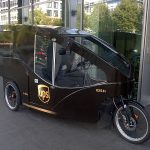
Seattle is one of the most congested cities in America, in part due to delivery trucks taking up space on crowded streets. One solution could be for companies to make deliveries using bicycles instead. UPS announced today that it will be pilot-testing deliveries with cargo e-bikes in downtown Seattle. This test is expected to last a…
Data Science & Spatial Analysis | Design & Building | Infrastructure & Transportation | Innovation & Technology | Policy & Law
November 15, 2018
Hydropower to become unsustainable as climate changes
Large hydropower dams will become a less sustainable source of renewable energy as the climate changes, especially in the developing world, according to a report released Nov. 5. Unpredictable weather extremes, especially severe climate-driven droughts, are likely to reduce the dams’ ability to generate electricity, concluded the Michigan State University study. To avoid unreliable power generation,…
Diversity, Equity & Justice | Health & Well Being | Infrastructure & Transportation | Natural Resources & Environment | Water
November 13, 2018
UW opens permanent food pantry on campus

Studies suggest that as many as 25 percent of college students nationwide do not get enough food. That’s one of the reasons why the University of Washington on Thursday opened a new, permanent food pantry. Located on the west side of campus in Poplar Hall, the 700-square-foot space provides free, nonperishable groceries and select fresh produce. Anyone…
Advocacy & Civic Engagement | Diversity, Equity & Justice | Food | Health & Well Being
November 9, 2018
What would happen in Seattle during a large-magnitude earthquake?
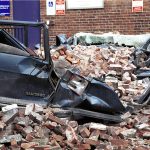
If a large-magnitude earthquake were to hit Seattle, what percentage of buildings would be safe? This listener question was posed to Jeff Berman, professor of Civil and Environmental Engineering at the UW. Continue to listen to the Radio broadcast
Design & Building | Infrastructure & Transportation | Innovation & Technology | Natural Hazards | Natural Resources & Environment
November 1, 2018
Valuing older buildings: Architecture professor’s book argues for reuse rather than wrecking ball
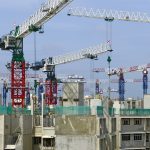
In her new book, Kathryn Rogers Merlino, University of Washington associate professor in the department of Architecture in the College of Built Environments, argues for the environmental benefit of reusing buildings rather than tearing them down and building anew. “I was trained as both an architect and architectural historian,” Merlino says, “and have always been drawn…
Design & Building | History & Preservation | Infrastructure & Transportation | Innovation & Technology | Land Use & Planning | Natural Resources & Environment
October 31, 2018
Park facilities encourage longer bouts of physical activity
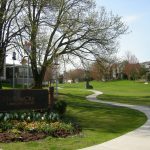
Researchers from the University of Washington School of Public Health watched 225 Seattle residents during their visits to public parks – through GPS devices, activity trackers and travel diaries – and found that they were active for longer at parks that had a greater variety of recreational facilities. The study, published online Sept. 19 in the Journal…
Design & Building | Health & Well Being | Infrastructure & Transportation | Land Use & Planning
October 26, 2018
BECU and CoMotion partner to create Seattle fintech hub

UW CoMotion has partnered with BECU, Washington’s largest community credit union, to create a fintech hub in the Seattle region, which includes the launch of the BECU FinTech Incubator at CoMotion Labs. Fintech startups, Noonum and Warren, are the first two members. The collaboration combines BECU’s expertise in broad-based financial services, data analysis, and customer experiences with CoMotion’s…
Economy & Development | Education | Innovation & Technology
October 25, 2018
Could parcel lockers in transit stations reduce traffic congestion in Seattle?

UW researchers want to know if parcel lockers that aren’t owned by a specific company could alleviate traffic congestion in Seattle.Matt Hagen Seattle is one of the most congested cities in America. Delivery trucks take up space on already crowded roads and idle in parking spots and loading bays. And if no one is available…
Data Science & Spatial Analysis | Infrastructure & Transportation | Innovation & Technology | Land Use & Planning