June 22, 2020
Protestors want Seattle de-gentrified – This is how it could happen

For more than a week, protesters against police brutality and racial injustice have occupied a six-block stretch of a Seattle neighborhood and turned it into a festive hub for their demonstrations. They named it the Capitol Hill Autonomous Zone, or CHAZ, since renamed the Capitol Hill Occupied Protest (CHOP), after police withdrew from a police…
Advocacy & Civic Engagement | Diversity, Equity & Justice | Economy & Development | History & Preservation | Housing & Homelessness | Land Use & Planning | Policy & Law
Fighting climate change means fighting racial injustice
“You can’t let one segment of society become a sacrifice.” Michael Méndez, an assistant professor at the University of California, Irvine, was on the phone talking about the protests sparked by the killing of George Floyd beneath a white police officer’s knee. But he was also talking about environmental justice and climate change. And he could…
Climate & Energy | Data Science & Spatial Analysis | Diversity, Equity & Justice | Health & Well Being | Natural Hazards | Natural Resources & Environment | Policy & Law
June 11, 2020
How Seattle’s unemployed survived the Great Depression
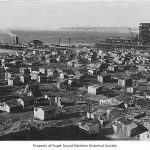
When the stock market crashed in fall of 1929, the road from joblessness to homelessness was short. Meager local relief programs and private charity weren’t up to the challenge of mass unemployment. As the Depression deepened and President Herbert Hoover resolutely opposed federal involvement in relief efforts, “Hoovervilles” sprang up around the country. Seattle’s largest shanty…
Advocacy & Civic Engagement | Diversity, Equity & Justice | Economy & Development | History & Preservation | Housing & Homelessness | Policy & Law
June 9, 2020
Cities have changed – for rats
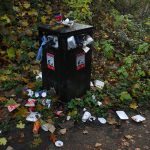
After Chicago’s stores and restaurants shut down in March, Rebecca Fyffe, the director of research at a pest-control company, went on one of her usual evening “rat safaris.” Her employer, Landmark Pest Management, services many of the city’s high-end, Michelin-rated restaurants, which had been forced to close hastily, dumping piles of produce. Beside a dumpster…
Economy & Development | Health & Well Being | Infrastructure & Transportation | Natural Resources & Environment
To address health inequities, Black folks need the right to move without harm

On a crisp afternoon last fall, Douglas Pullen, a 69-year-old Black man, was nearly hit by a white driver during his daily walk through his Seattle neighborhood. Having witnessed this, Kate Hoerster, assistant professor of Psychiatry and Behavioral Sciences at UW School of Medicine, checked on Mr. Pullen after he was safely on the other side…
Diversity, Equity & Justice | Health & Well Being | Infrastructure & Transportation | Policy & Law
June 4, 2020
West Seattle Bridge is a surprise crisis, but plenty of other aging Seattle bridges are also vulnerable
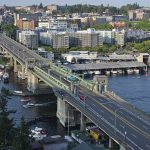
In January, if West Seattle commuters caught in a bottleneck had gazed out the window at their high bridge and wondered about its safety, a look at federal bridge ratings may have calmed their nerves. The bridge was labeled sufficient. In a catchall rating out of 100, it had a respectable 69. By the spring,…
Design & Building | Infrastructure & Transportation | Natural Hazards
Will the Spokane housing market weather the storm? Homebuying during the pandemic remains competitive and continues to favor the seller
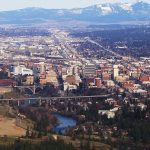
Beth and Larry Belcher found the perfect home in Spokane, but it wasn’t easy. The couple was aware of Spokane’s housing market dynamics: low inventory, rising prices and high demand. But they didn’t expect to overcome an additional hurdle of searching for a home during a pandemic. “Looking for homes during COVID-19 was a little…
Economy & Development | Health & Well Being | Housing & Homelessness
June 2, 2020
Urban carnivores appear to be more nocturnal as region slows due to coronavirus
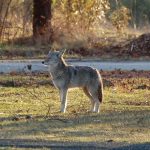
The slowdown of daily life under stay-at-home orders because of the coronavirus has many of us feeling more connected to nature. We hear more birdsong in the mornings. The air seems cleaner. Perhaps we’re seeing more wildlife in the parks as we take walks in our neighborhoods. But the change of pace hasn’t necessarily benefitted…
Natural Resources & Environment
May 28, 2020
Less traffic means 40% drop in car pollution in Seattle but will it last?
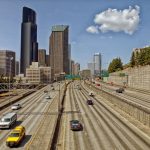
Experts say our good air quality this spring is partially due to people driving less. However, they warn that unless big, long-term changes are made, these cleaner skies are not here to stay. From late March through the end of April, car pollution in Seattle dropped by roughly 40 percent compared to the same time…
Health & Well Being | Infrastructure & Transportation | Natural Hazards | Natural Resources & Environment | Policy & Law
Pandemic lays bare the everyday stressors, inequities of marginalized communities
On March 14, two weeks after the first U.S. coronavirus death was announced here in King County and as an onslaught of social distancing policies descended on our communities, we began a research study to understand how 500 King County residents were coping with all of it. Every evening, study participants have been generously sharing with us…
Diversity, Equity & Justice | Economy & Development | Health & Well Being | Policy & Law